Small Kitchen Storage Ideas: 15 Ways to Use Every Vertical Inch
If you’ve measured your kitchen counter three times hoping the number would change, you already know the real problem with a small kitchen: you ran out of horizontal space months ago. The counters are full, the cabinets are packed tight, and the drawers stick when you try to close them. The next move isn’t a bigger kitchen — it’s using the vertical space you’ve been walking past every day, from the strip of wall above the counter to the inside of the cabinet doors you open twenty times a day without looking at.
This matters even more if you rent. You can’t knock out a wall or install built-in shelving, and you probably don’t want to explain nail holes to a landlord at move-out. The good news is that most vertical storage solutions are removable, adjustable, and cheap enough to test in one zone before committing to a full kitchen overhaul. Before buying anything, grab a tape measure — wall width, cabinet interior height, drawer depth, and the width of any gaps between appliances. Vertical storage only works if the piece you buy actually fits the space you have, not the space you assumed you had.
Why Vertical Space Solves Small Kitchen Storage Problems
In a small kitchen, counters and base cabinets fill up first because they’re the most obvious storage. Everything gets piled on the counter or crammed into the same three cabinets until you’re digging through stacks to find a lid. Vertical space — walls, the backs of doors, the air above your dishes — usually sits empty because it takes a little more planning to use.
That’s exactly why it’s the renter-friendly workaround. Most vertical storage tools (hooks, magnetic strips, pegboards, risers) are designed to be temporary or semi-permanent, which means you can add real storage capacity without a single structural change to the apartment. The catch is that vertical solutions are only as good as their measurements. A pegboard that’s two inches too wide, or a riser that doesn’t clear your cabinet shelf, becomes clutter instead of storage. Measure the wall section, the cabinet interior, and any door you’re considering before you order anything.
Start With a Quick Kitchen Audit
Before buying a single organizer, walk through your kitchen and note the vertical zones you’re not using: the inside of cabinet doors under the sink, the blank wall strip between the counter and the upper cabinets, the dead space above the fridge or microwave. These are usually free real estate.
Next, sort your kitchen items by how often you use them. Everyday tools — the coffee mug, the go-to knife, the spatula — should land at eye level or within easy arm’s reach. Things you use once a month, like a roasting pan or a punch bowl, can go higher up or in a harder-to-reach spot. This sorting step keeps vertical storage functional instead of just decorative.
Last, check your lease. Some rental agreements restrict wall attachments, adhesive hooks, or anything that leaves a mark, and some landlords are stricter than others about magnetic strips or pegboards that need anchors. A quick read-through (or a text to your landlord) now saves you a security deposit fight later.
Removable Hooks for Light, Everyday Items
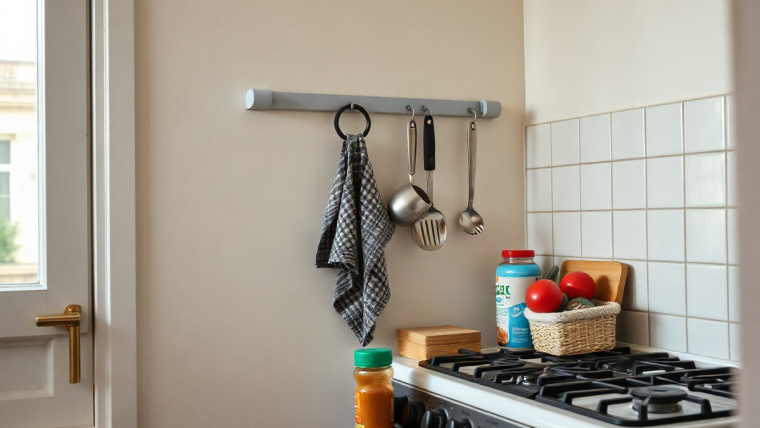
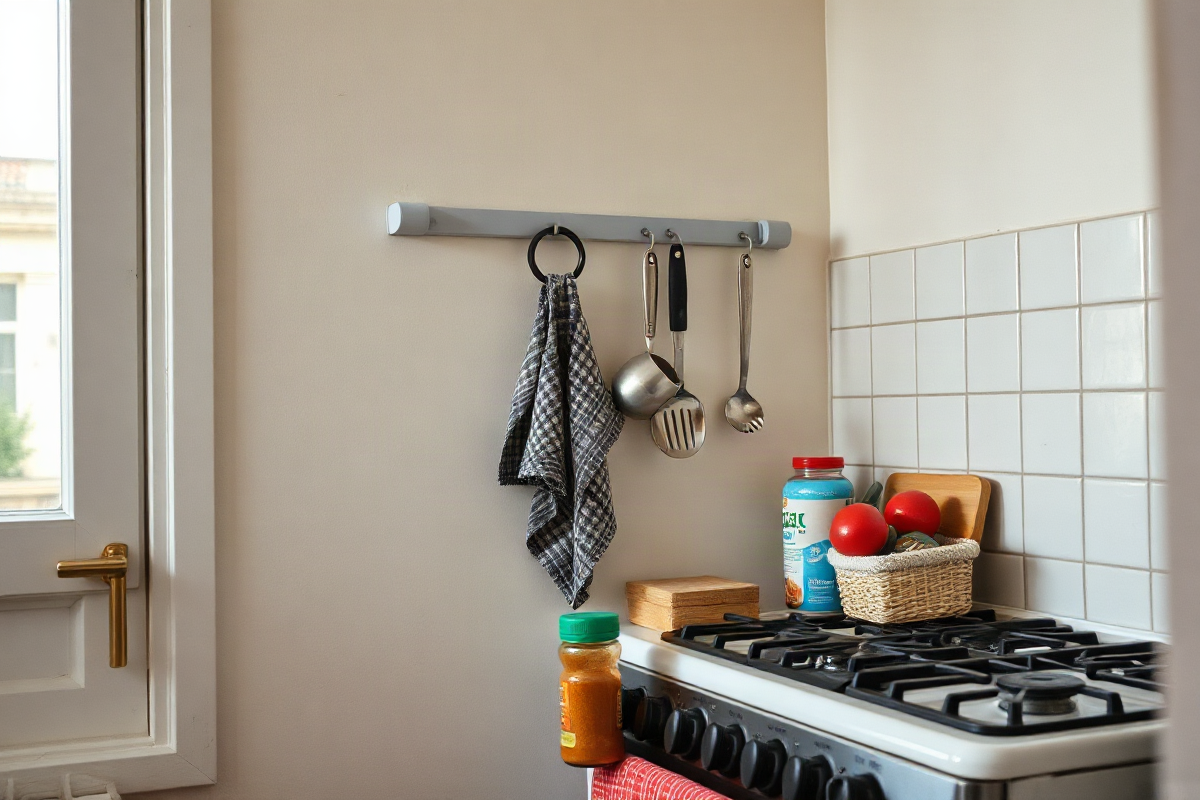
Removable hooks are the easiest entry point into vertical kitchen storage. They work well for lightweight items: mugs, dish towels, oven mitts, measuring cups, and small utensils that would otherwise clutter a drawer.
Removable hooks — look for a stated weight limit, confirmed surface compatibility (painted drywall, tile, laminate), and clear removal instructions. Limitation: adhesive hooks lose holding power on textured walls, humid areas near the stove, or surfaces with peeling paint, and exceeding the rated weight limit is the most common reason they fail. Test any hook on an inconspicuous spot first, and follow the manufacturer’s removal steps (often a slow, angled pull) to avoid pulling off paint or wallpaper.
Magnetic Strips for Knives and Metal Tools
A magnetic strip mounted on the wall or backsplash frees up drawer space that knives and metal utensils otherwise hog. It also keeps knives visible and easy to grab instead of buried under other tools.
Magnetic strips — check the mounting method (screw-in versus adhesive-backed), magnet strength, and whether the strip is rated for the weight of your specific knives or tools. Limitation: adhesive-backed strips generally hold less weight than screw-mounted ones, and not every wall or backsplash material is suitable for adhesive mounting. Position the strip away from high-traffic walkways and out of easy reach of kids, since exposed blades at counter height are a real hazard in a busy kitchen.
Pegboards for Custom, Adjustable Storage
Pegboards give you a customizable wall of storage for pots, pans, lids, and cooking tools you rotate often. Because the hooks are movable, you can rearrange the layout as your cooking habits change, which is harder to do with fixed shelving.
Pegboards — choose a kit with adjustable hooks so you’re not locked into one configuration, and confirm the wall anchors included are appropriate for your wall type. Limitation: drywall and plaster have different weight limits, and a pegboard loaded with cast iron pans needs anchors rated for that load — not the lightweight plastic anchors some kits ship with by default. In a rental, ask about wall material before drilling, since plaster walls crack more easily than drywall if you use the wrong anchor.
Shelf Risers to Double Cabinet and Countertop Space
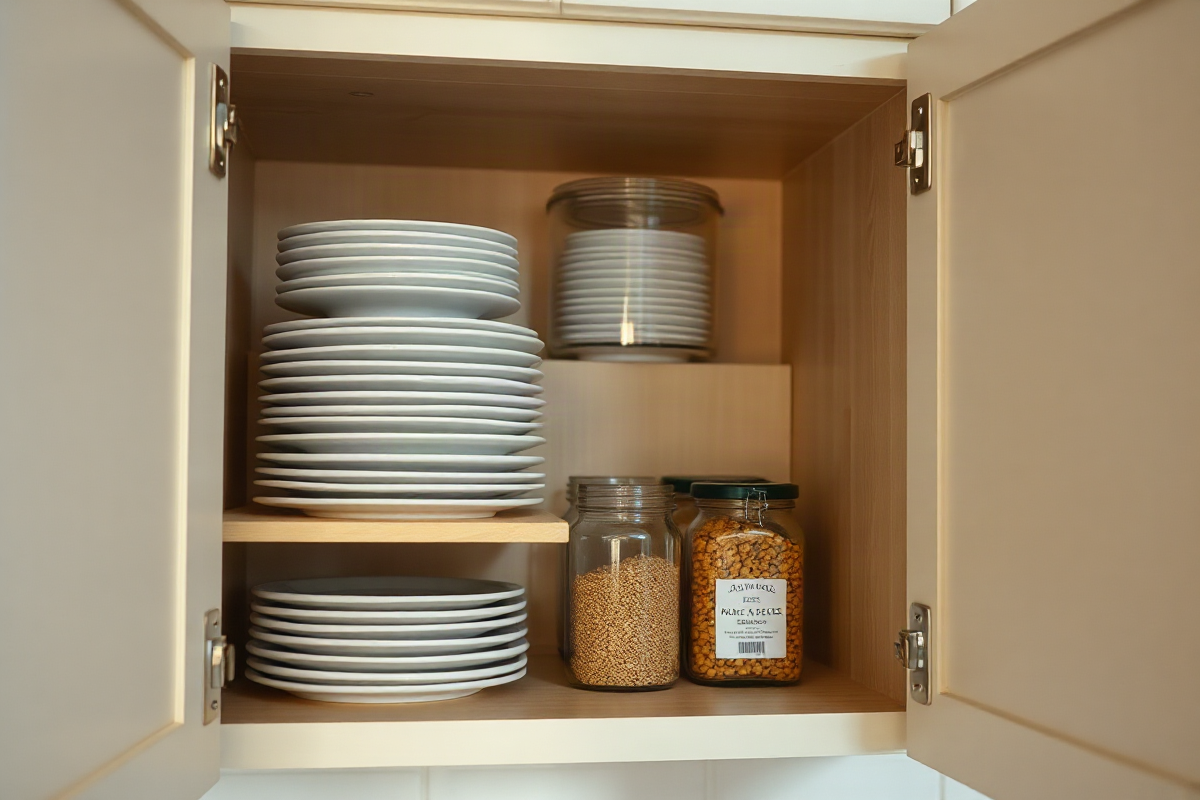
Shelf risers add a second tier inside a cabinet or on a countertop, letting you stack plates, bowls, or canned goods instead of leaving several inches of empty air above a single row of items.
Shelf risers — confirm the stated weight capacity matches what you’re storing (heavy stoneware needs a sturdier riser than lightweight melamine plates), and measure your cabinet’s interior height before buying. Limitation: if the riser and the stacked items together exceed the cabinet’s interior clearance, the door won’t close, and stacking beyond the riser’s tested load limit risks a collapse. Measure twice — riser height plus the tallest item you plan to place on top.
Slim Carts for Narrow Gaps and Extra Surface Area
A slim rolling cart can turn a dead gap — between the fridge and the wall, or beside a stove — into functional storage and extra counter surface, all without any installation.
Slim carts — measure the exact gap width (not just an estimate) and check the cart’s total width including wheels, since wheel housings often add an inch or two you won’t see in a product photo. Limitation: narrow carts can wobble under weight, so check for a stable base and confirm the shelf weight limits before loading heavy cookware or a stack of canned goods. Wheel locks matter too, especially if the cart lives in a walkway.
Drawer Organizers to Reclaim Wasted Drawer Depth
Drawer organizers don’t add vertical wall space, but they reclaim wasted vertical depth inside a drawer, which matters just as much in a small kitchen where every drawer tends to become a catch-all.
Drawer organizers — measure the drawer’s length, width, and depth before ordering, and choose adjustable dividers if your drawer sizes are inconsistent (common in older rental units). Limitation: a fixed-size organizer that’s even a half-inch too long won’t sit flat, and overloading a drawer with heavy dividers plus contents can strain the drawer’s slide mechanism beyond its rated capacity, leading to sticking or sagging over time.
Turntables for Deep Cabinets and Corner Blind Spots
Turntables (lazy Susans) solve the classic deep-cabinet problem: items pushed to the back that you forget exist. Spinning access instead of reaching-and-digging makes those corner and deep-shelf spaces actually usable.
Turntables — match the diameter to your actual usable shelf space (measure the shelf, not the outer cabinet frame, since hinges and trim eat into usable width), and check the weight rating if you’re storing heavier bottles or jars. Limitation: lightweight plastic turntables can crack under the weight of glass jars or oil bottles over time, so verify the material is rated for what you intend to store, not just for lightweight spice jars.

Combining Vertical Solutions Into One Small Kitchen Layout
It’s tempting to buy every product on this list at once, but a full overhaul often backfires — hooks go up in the wrong spots, a pegboard ends up half-empty, and you’re left returning things. Start with one or two zones that solve your biggest daily frustration, whether that’s the overflowing knife block or the cabinet door you can’t fully open because of a stacked mess inside.
Whatever you choose, measure twice and read the installation guidance for each product together, not in isolation — a magnetic strip above a pegboard, for example, needs enough clearance so hooks and knives don’t collide. After a few weeks of actually cooking and cleaning with the new setup, reassess. What looked efficient on paper sometimes turns out to be in the way once you’re moving around a small kitchen in real time, and it’s easier to adjust one or two additions than an entire wall of storage.