Renter-Friendly Small Kitchen Organization Ideas That Need No Drilling
Most rental leases say the same thing in different words: no drilling, no permanent fixtures, and the wall has to look the way it did when you moved in. That rules out a lot of the kitchen storage advice built for homeowners — no wall-mounted shelving, no screwed-in racks, no anchors in tile. If you’re working with a small rental kitchen, the real question isn’t “how do I add more storage” but “how do I add storage that comes off clean when I move out.”
Why Renter-Friendly Kitchen Storage Looks Different
Across the US, UK, Canada, and Australia, standard tenancy agreements tend to restrict drilling, wall anchors, and anything that counts as an “alteration” to the unit. Some leases allow small nail holes with notice; many don’t allow anything. Either way, the safe assumption is that whatever you install needs to be removable without patching, painting, or replacing a shelf bracket.
The goal in a small rental kitchen is to make better use of vertical space and cabinet interiors without touching the walls structurally. That usually means adhesive, tension, magnetic, or freestanding solutions instead of screws.
One caveat worth repeating: “damage-free” is not universal. Textured walls, older paint, tile grout, and laminate all react differently to adhesive products. A hook rated for smooth drywall may pull paint off a textured wall or fail on humid tile near a stove. Testing on your specific surface always matters more than the packaging claim.
Start With a Quick Kitchen Audit
Before buying anything, take ten minutes to measure. Note the height and width of open wall space you’re allowed to use, the interior dimensions of your cabinets (height between shelves, depth, width), and how much counter depth you actually have free once appliances are in place.
- Measure cabinet interiors before buying risers, turntables, or bins — a riser that’s a half-inch too tall won’t close the cabinet door
- Look for wasted zones: the inside of cabinet doors, the empty air above stacked plates, corners where two cabinet runs meet
- Separate items into daily-use (should stay at arm’s reach) and occasional-use (can go higher, deeper, or in a less convenient spot)
Vertical Storage Without Drilling
Vertical space is usually the most underused part of a small kitchen, and it’s also the easiest to reclaim without hardware.
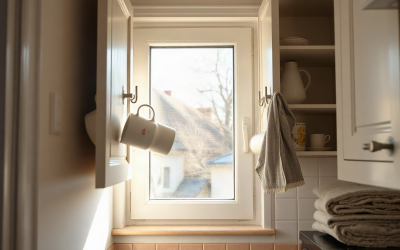
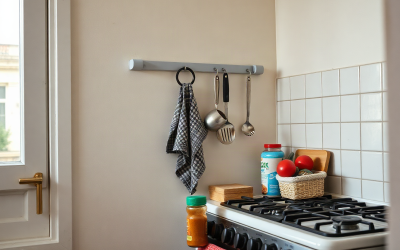
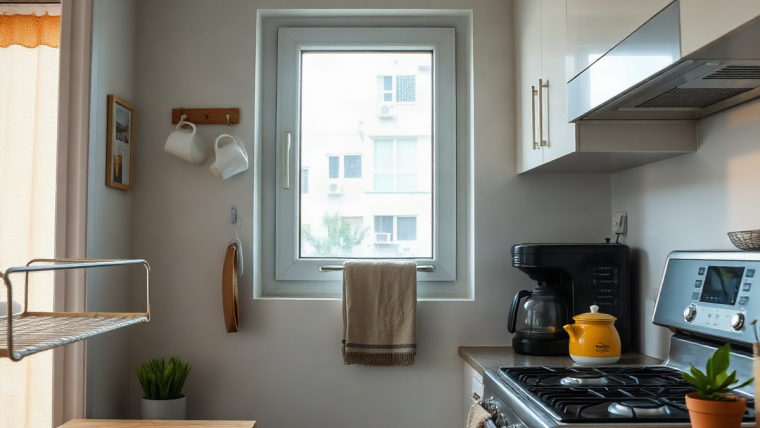
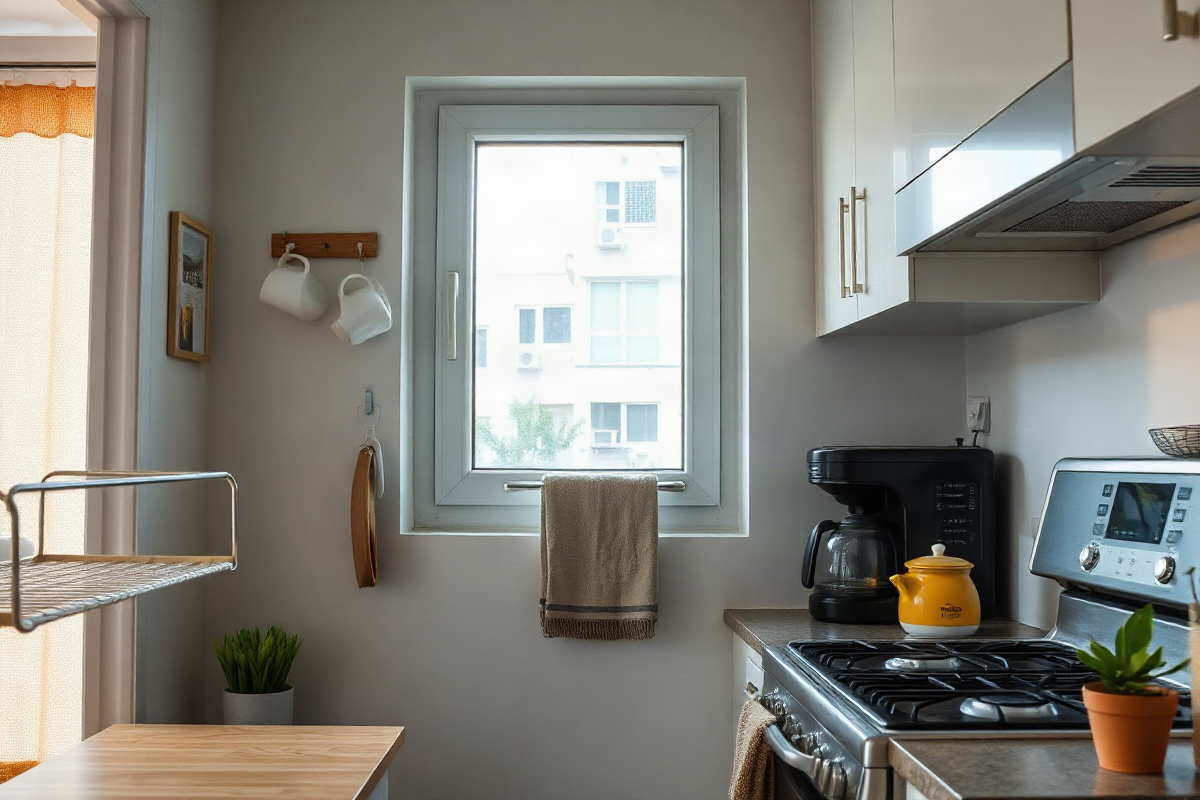
- Removable adhesive hooks work well for mugs, oven mitts, dish towels, or hanging utensils. Look for a stated weight capacity and confirm it’s rated for the surface you have — painted drywall, tile, and laminate all hold adhesive differently. Limitation: heat and steam near a stove can shorten adhesive life, so keep them away from direct range exposure.
- Magnetic strips can hold knives or metal tools on the side of a fridge or other magnetic appliance surface, freeing up a drawer. Limitation: not all knives are magnetic-friendly (many stainless blades are, but bonded or coated ones may not grip well), and heavier tools can slide or drop if the magnet strength isn’t rated for them.
- Freestanding or tension-rod pegboards lean against a wall or wedge between counter and upper cabinet without anchors. Limitation: stability depends on flooring — an uneven tile floor or a gap at the baseboard can make a leaning pegboard less secure, so check before loading it with heavier pots.
Maximizing Cabinet and Shelf Space
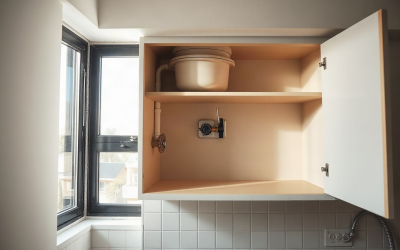
Cabinets are the one part of a rental kitchen you’re free to reorganize however you like, since nothing there is fixed to the wall.
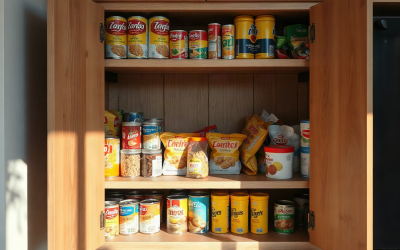
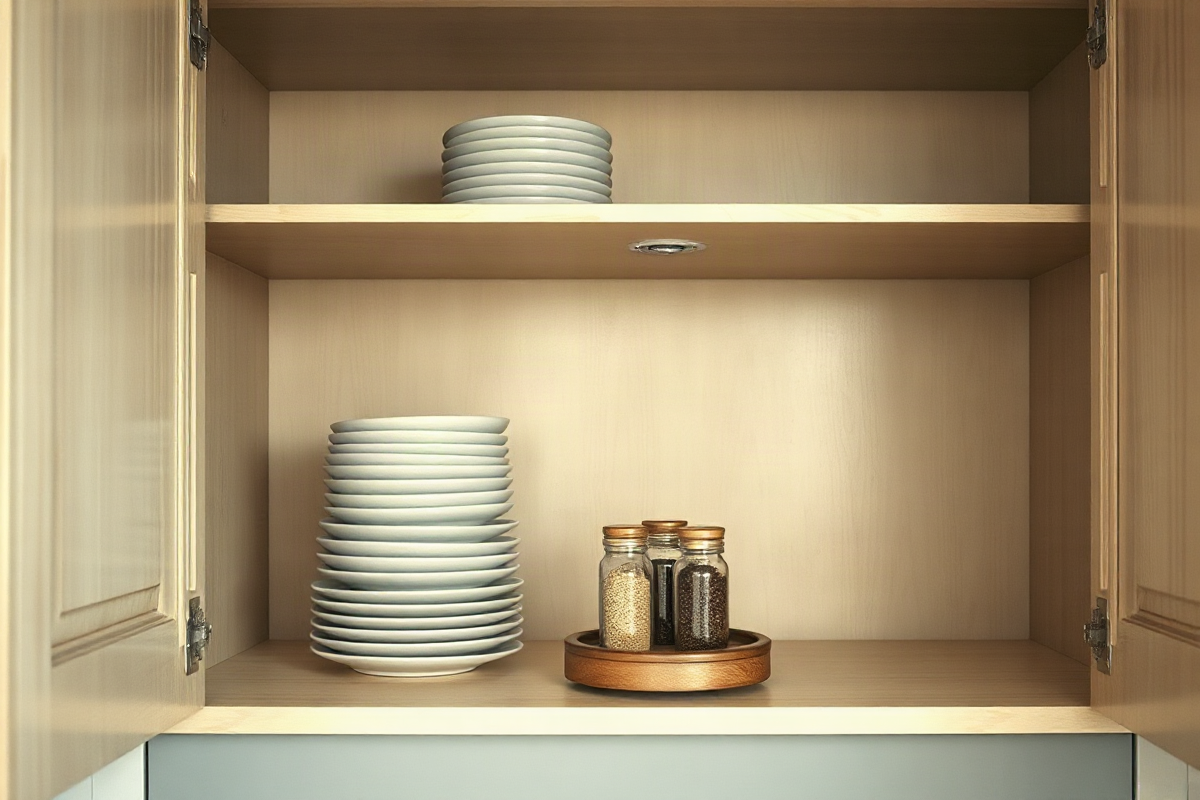
- Shelf risers add a second tier inside a cabinet for plates, cans, or spice jars, effectively doubling usable space on one shelf. Buying criteria: match the riser height and depth to your actual cabinet measurements, not an average. Limitation: overloading the top tier of a riser can cause tipping if the cabinet shelf itself is shallow or the riser has thin feet.
- Turntables (lazy Susans) help with corner cabinets or deep shelves where items get pushed to the back and forgotten. Check the diameter against your shelf size and confirm a weight rating if you’re storing jars or bottles. Limitation: glass turntables can crack under uneven weight, so heavier items should sit centered rather than clustered on one side.
- Stackable bins group small items — spice packets, snack bags, baking supplies — by category so you’re not digging through a single deep shelf. Limitation: bins with no clear front make it easy to lose track of what’s inside; labeling helps but is another thing to maintain.
Small Footprint Furniture: Slim Carts
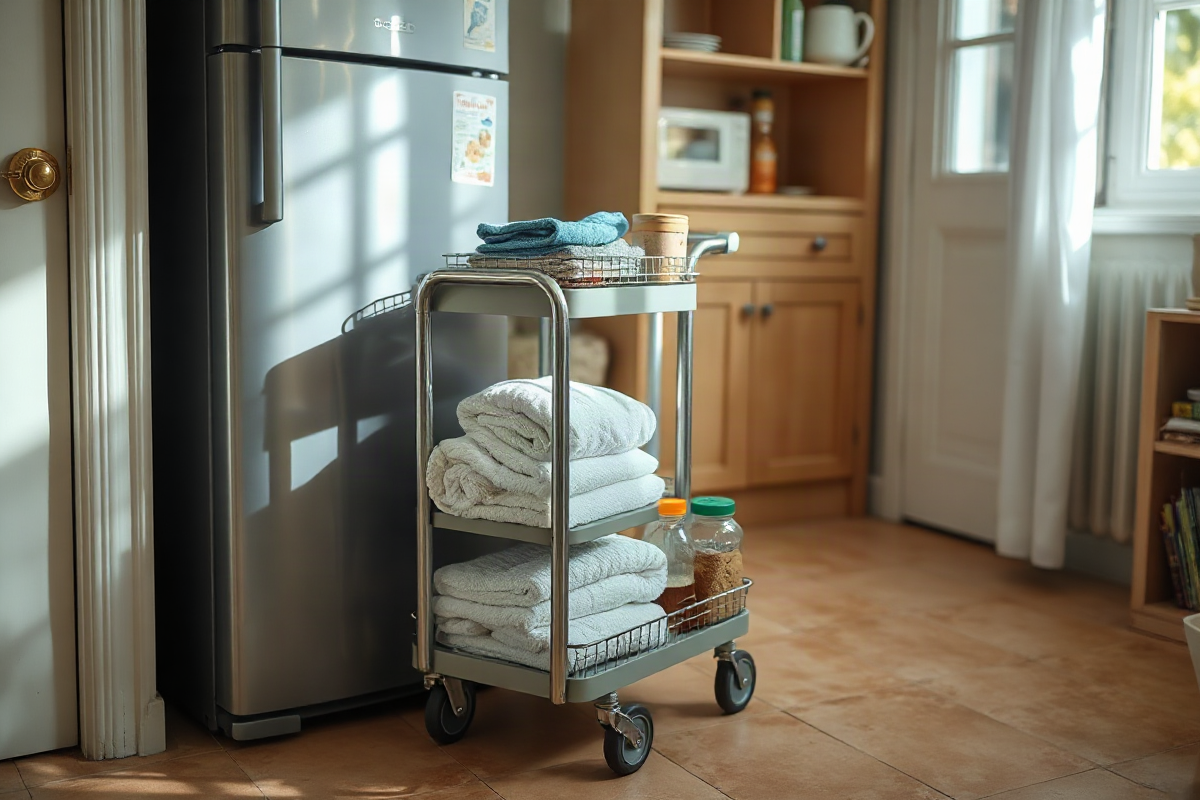
When cabinet and wall space are maxed out, a slim rolling cart can act as extra counter or pantry space without needing to be fixed to anything.
- Measure your doorway width and any gaps between counter and appliance before buying — a cart that doesn’t fit through the kitchen doorway is useless no matter how good the shelves are.
- Look for locking wheels so the cart stays put while you’re using it as a prep surface, then rolls away when you need the floor space back.
- Limitation: carts on uneven or older rental flooring can drift slightly even with wheels unlocked, so get in the habit of locking them whenever the cart is stationary, not just during use.
Drawer Organization That Moves With You
Drawers are fully yours to rearrange, and organizers here are one of the few upgrades that transfer directly to your next apartment.
- Adjustable drawer organizers for utensils and gadgets are worth prioritizing over fixed-size trays, since drawer widths vary a lot between rental units and you’ll likely move at some point.
- Non-slip liners paired with dividers keep organizers from sliding around every time the drawer opens, which is a common complaint with lightweight plastic trays.
- Group items by how often you use them — everyday utensils in the top drawer, occasional gadgets (melon baller, garlic press) lower down — to cut down on digging through clutter.
- Limitation: adjustable organizers with a lot of moving parts can flex or shift under heavy items like large serving spoons; verify the drawer glide’s weight limit too, especially in older rental cabinetry.
Weight Limits and Surface Safety Basics
Every product mentioned here comes with a stated weight limit and surface guidance, and it’s worth actually reading it rather than assuming “kitchen hook” means “holds a cast iron pan.”
- Check the manufacturer’s weight and surface guidance before hanging anything — adhesive hooks rated for 2-3 pounds won’t hold a heavy ceramic mug collection or a cast iron skillet.
- Test adhesive hooks and strips on a small, hidden area first (inside a cabinet door, behind an appliance) to see how your specific wall or surface reacts before committing to a visible spot.
- Avoid overloading magnetic strips with heavy knives or multiple tools stacked close together — magnets rated for light utensils can fail under a chef’s knife if you hang more than one item per few inches.
Putting It Together: A Sample Small Kitchen Layout
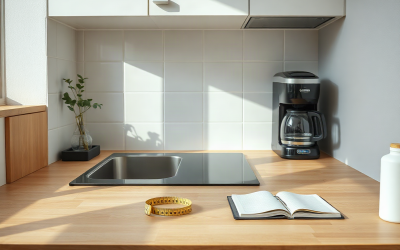
A workable small rental kitchen layout might split into four zones: a prep area kept clear on the counter, a “storage wall” using adhesive hooks or a leaning pegboard for daily tools, cabinet interiors organized with risers and turntables for less-visible storage, and a mobile cart for overflow pantry items or extra counter space when cooking.
- Keep the prep zone empty by default — this is usually the first thing that gets cluttered and the last thing people think to protect
- Don’t combine too many storage types in one small area; a wall with hooks, a magnetic strip, and a pegboard all in the same three feet gets visually and physically crowded fast
- After about two weeks of actually cooking and cleaning up in the space, reassess — items that seemed like daily-use often turn out to be occasional, and vice versa, so plan to move a few things around rather than treating the first layout as final
None of these changes require a landlord’s permission or a deposit risk, which is the main point. The tools that hold up best in a rental kitchen are the ones you can test cheaply, adjust often, and take with you — rather than the ones you have to commit to on day one.