Elevate Your Workday Style: The Ultimate Guide to Men’s Business Casual Outfits
As the modern workplace evolves, the dress code has become increasingly casual. However, maintaining a polished, professional appearance is still crucial for success. Navigating the realm of men’s business casual can be a daunting task, but fear not – this comprehensive guide is here to help you build a versatile wardrobe that seamlessly blends style and practicality.
Why Invest in Refined Business Casual Attire?
A well-crafted business casual ensemble conveys confidence, competence, and a strong sense of personal brand. It can open doors, impress potential clients, and even boost your own self-assurance in the workplace. By striking the right balance between comfort and sophistication, you can cultivate an image that commands respect and projects an air of professionalism.
How to Choose the Right Business Casual Pieces
Selecting the appropriate business casual items can be a delicate balancing act. Consider the following factors to ensure a cohesive and polished look:
- Fit: Clothing that fits well flatters the body and creates a sharp, tailored silhouette. Invest in well-fitting shirts, trousers, and jackets that accentuate your frame.
- Fabric Quality: Look for fabrics that are durable, breathable, and easy to care for, such as cotton, linen, and wool blends. Avoid overly shiny or flimsy materials that can appear casual or unprofessional.
- Versatility: Choose pieces that can be easily mixed and matched, allowing you to create multiple outfits from a few key components. This maximizes the value of your wardrobe investments.
- Appropriate for the Workplace: Ensure that your choices align with the dress code and culture of your organization. Consult with colleagues or research the company’s expectations to avoid any fashion faux pas.
Essential Business Casual Wardrobe Staples
Building a cohesive business casual wardrobe begins with investing in these fundamental pieces:
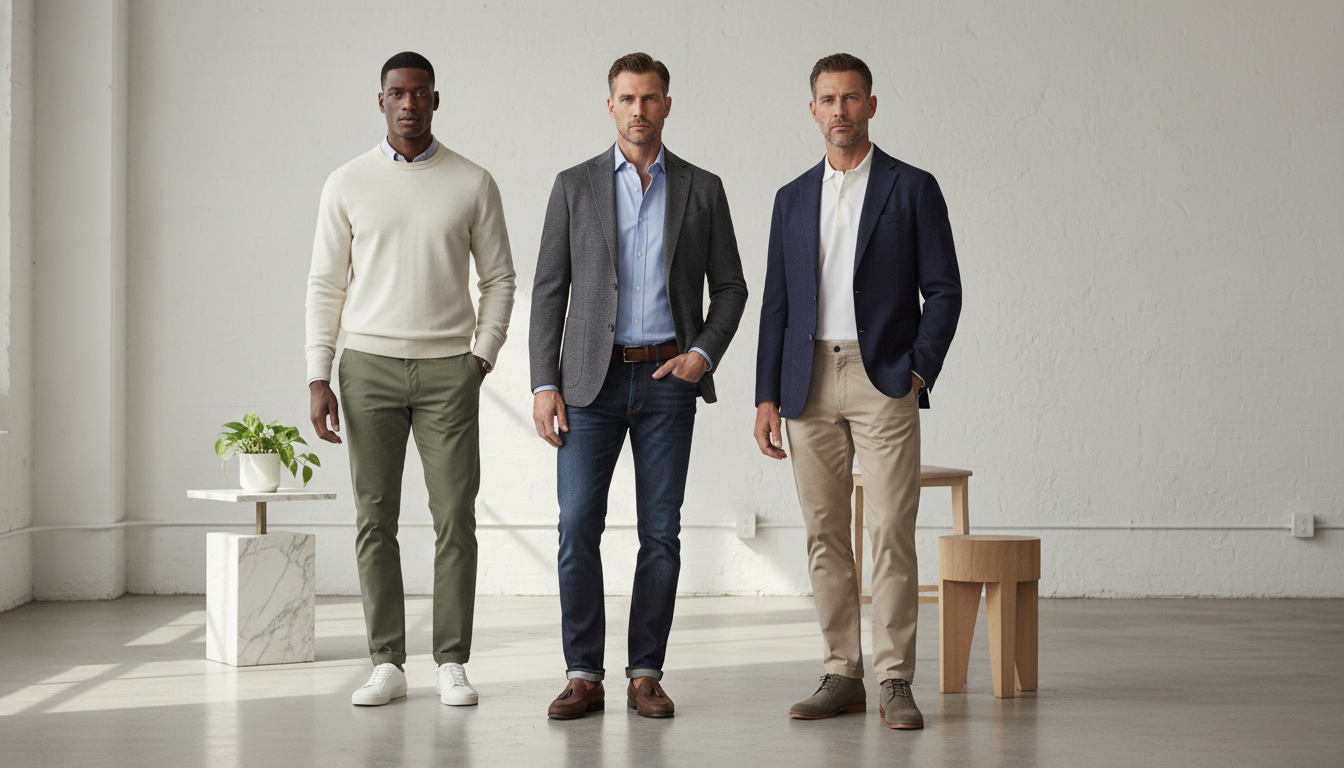
- Dress Shirts: Choose button-down shirts in classic colors like white, blue, or gray. Opt for high-quality fabrics that are easy to care for and maintain their shape.
- Chinos or Slacks: Well-fitted chinos or tailored trousers in neutral hues like beige, navy, or charcoal are versatile and appropriate for the office.
- Blazer or Sport Coat: A well-fitted blazer or sport coat in a neutral tone can instantly elevate any business casual look.
- Dress Shoes: Invest in a pair of comfortable, polished dress shoes, such as oxfords or loafers, to complete your professional ensemble.
- Knit Polos or Sweaters: These versatile garments can be worn on their own or layered under a blazer for a more casual-yet-refined look.
Advantages and Disadvantages of Business Casual Attire
Advantages:
- Increased comfort and flexibility compared to traditional business formal wear
- Allows for self-expression and personal style within the professional context
- Can foster a more relaxed, collaborative work environment
- Reduces the time and effort required for daily wardrobe selection
- Typically more cost-effective than a full suit-and-tie wardrobe
Disadvantages:
- Potential for confusion or misinterpretation of appropriate attire
- Risk of appearing too casual or unprofessional if the dress code is not properly understood
- Requires a balance between comfort and formality, which can be challenging to achieve
- Potential for less respect or authority if the business casual look is not executed well
- Requires a more extensive wardrobe to create versatile, polished outfits
Caring for Your Business Casual Wardrobe
To ensure your business casual pieces maintain their pristine appearance and longevity, follow these care and maintenance tips:
- Proper Laundering: Follow the care instructions on each garment, washing items in cold water and air-drying or low-heat tumble drying when possible. This will help preserve the fabric and shape of your clothing.
- Ironing and Pressing: Invest in a high-quality iron and regularly press your shirts, trousers, and jackets to keep them looking sharp and wrinkle-free.
- Spot Cleaning: Tend to any stains or spills immediately using a mild detergent or stain remover to prevent them from setting in and becoming more difficult to remove.
- Proper Storage: Hang dress shirts, blazers, and trousers on sturdy hangers to maintain their shape. Fold and store knits and other items neatly to prevent creases and wrinkles.
- Shoe Care: Regularly polish and condition your dress shoes to keep them looking their best. Use shoe trees to help them retain their shape when not in use.
Frequently Asked Questions
Q: What is the difference between business casual and business formal attire?
Business formal attire, such as a suit and tie, is generally more conservative and structured, while business casual is more relaxed and allows for more personal expression through clothing choices. Business casual typically includes items like collared shirts, chinos, and blazers, without the need for a full suit.
Q: Can I wear jeans in a business casual office?
Whether jeans are acceptable in a business casual workplace can vary depending on the company culture and dress code. In general, dark-wash, well-fitted jeans without distressing or holes may be acceptable, but it’s best to check with your employer or observe the attire of your colleagues before wearing them to the office.
Q: How do I accessorize a business casual outfit?
Accessorize with purpose, using items that complement your outfit and project a polished, professional image. Appropriate accessories may include a leather belt, a simple watch, a discrete tie or pocket square, or a professional-looking bag or briefcase. Avoid overly flashy or casual accessories that can detract from the overall business casual aesthetic.
Q: What are some tips for transitioning from a business casual to a business formal outfit?
To transition from business casual to business formal, focus on adding a few key pieces, such as a suit jacket or a tie. Opt for a button-down shirt, dress trousers, and polished dress shoes. With a few strategic additions, you can easily elevate your business casual look to a more formal, suit-and-tie ensemble.
Q: How can I incorporate personal style into a business casual wardrobe?
The beauty of business casual is the ability to express your personal style while maintaining a professional appearance. Experiment with different shirt patterns, sweater textures, or accessory choices to infuse your outfits with your unique flair. Just be mindful to keep the overall look polished and appropriate for the workplace.
By mastering the art of business casual dressing, you can elevate your professional image, exude confidence, and navigate the modern workplace with sartorial savvy. Embrace the flexibility of this dress code and let your personal style shine through, all while maintaining a polished, put-together appearance.